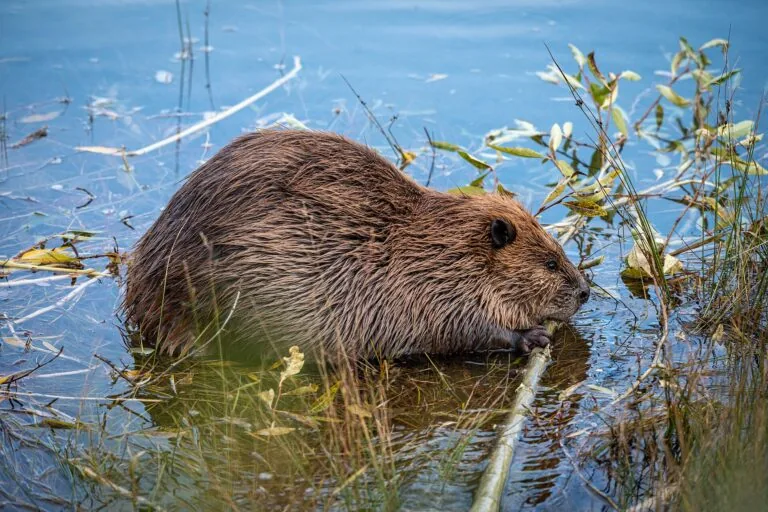
More than 40 years after sediment from a volcanic eruption filled up a stretch of the North Fork Toutle River in the U.S. state of Washington, beavers are turning the smothered waterway into a thriving wetland. However, a planned infrastructure project now threatens to undo five years of restoration progress, reports contributor Isabel Gil for Mongabay.
Following the 1980 eruption of Mount St. Helens, Mark and Dawn Smith, owners of the Eco Park Resort, watched as volcanic sediment accumulated over native vegetation and wildlife along the river. The degradation was exacerbated when the U.S.
Army Corps of Engineers in 1989 built a sediment retention structure (SRS) to hold back sediment to protect shipping routes and downstream communities from flooding. The structure trapped volcanic material, creating a massive sediment plain on the Smiths’ property. In 2021, the Smith family began collaborating with natural resource experts from the Cowlitz Indian Tribe, the Cascade Tribe, and conservation groups to reintroduce beavers (Castor canadensis) to the area.
Emily Fairfax, an assistant professor of geography at the University of Minnesota, told Mongabay that 58 beavers have been relocated to the resort in the last five years. Many of them were at risk of being euthanized after coming into conflict with humans in other areas. The relocated beavers have established a complex network of dams and what Smith described as “honeycomb” canals, deepening ponds and allowing native willows and alders to take root.
Smith said he’s seen ducks and elk return to his property. Moreover, the…This article was originally published on Mongabay





Comentários (0)
Entre ou cadastre-se para comentar.