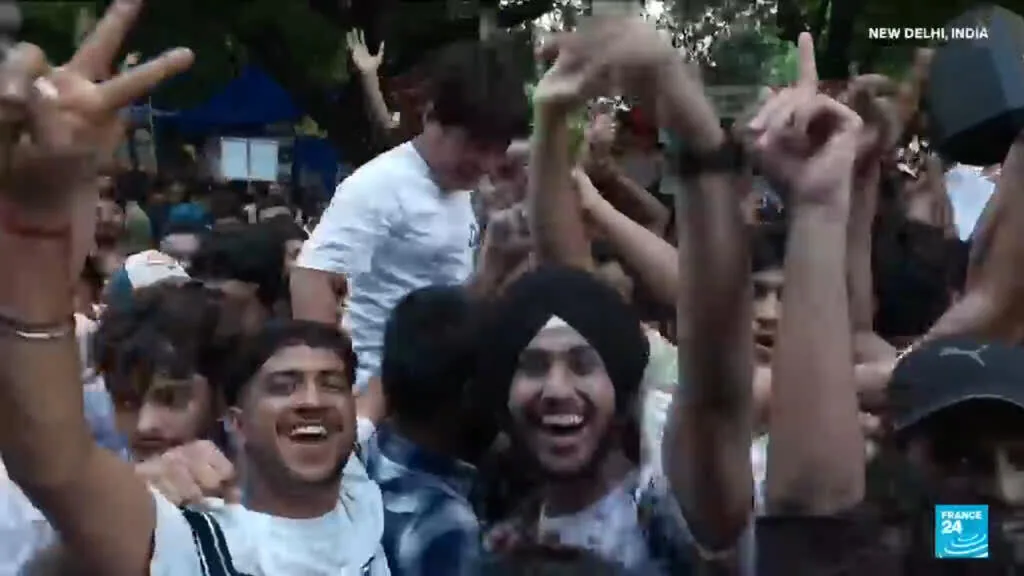
How India's Gen-Z protesters shifted the political debate July 27, 2026On Saturday, student protesters embraced, danced and climbed onto barricades as chants of victory echoed across the New Delhi's historic Jantar Mantar protest site. After weeks of demonstrations, marathon negotiations and repeated government refusals, a movement satirically named the "Cockroach Janata Party (CJP)" succeeded in its demand for Indian Education Minister Dharmendra Pradhan to step down. The movement began on social media as a satirical activist campaign sparked by leaks of a question sheet for the highly competitive NEET exam in early May.
Along with Pradhan's resignation, the government also agreed to provide the maximum possible compensation to families of students who died by suicide following the NEET paper leak controversy. Additionally, it promised to withdraw criminal cases against protesters, refrain from pursuing future legal action and continue discussions on the CJP's five-point charter for academic examination reform. The CJP, in turn, announced it was calling off further protest action "in good faith" while added that it would closely monitor whether the government promises were implemented.
"This is a victory of democracy," CJP founder Abhijeet Dipke told thousands of jubilant supporters. Prime Minister Narendra Modi's Bharatiya Janata Party (BJP) has insisted meeting some of the protest demands reflects responsible governance rather than capitulation. "Pradhan's resignation is an example of putting students and the nation above political positions," said Home Minister Amit Shah.
However, the resignation of a cabinet minister following public outcry amounts to a rare retreat by Modi's government. Taken together, the concessions mark a remarkable victory for a movement that the government had initially dismissed as little more than a social media campaign. "Nobody should underestimate student power.
Our voice is finally heard. When we stand united, we can achieve many things," Uma Singh, a CJP supporter from the eastern Bihar state who spent days camping in New Delhi, told DW. 'Cockroach' movement forces a rare BJP retreat Some 48 hours before Pradhan's resignation, senior Hindu nationalist BJP and government sources had said removing him was not under serious consideration, even as protests continued to grow in Delhi while solidarity demonstrations spread to cities across India.
Earlier concessions, including the removal of 47 National Testing Agency officials, promises of fast-track courts and administrative reshuffles, failed to satisfy protesters. At the same time, the government faced growing concern that the confrontation would dominate the monsoon session of parliament and hand the opposition a powerful political issue. Faced with mounting pressure both on the streets and inside parliament, the BJP reversed course.
Indian activist Amrita Johri believes the 'Cockroach' movement's victory amounts to a major shift in political debate in India. "The movement's significance extends well beyond the resignation of one minister. It showed that a loosely organised generation of young Indians could compel political concessions from a government long regarded as resistant to street pressure," Johri told DW.









Comentários (0)
Entre ou cadastre-se para comentar.