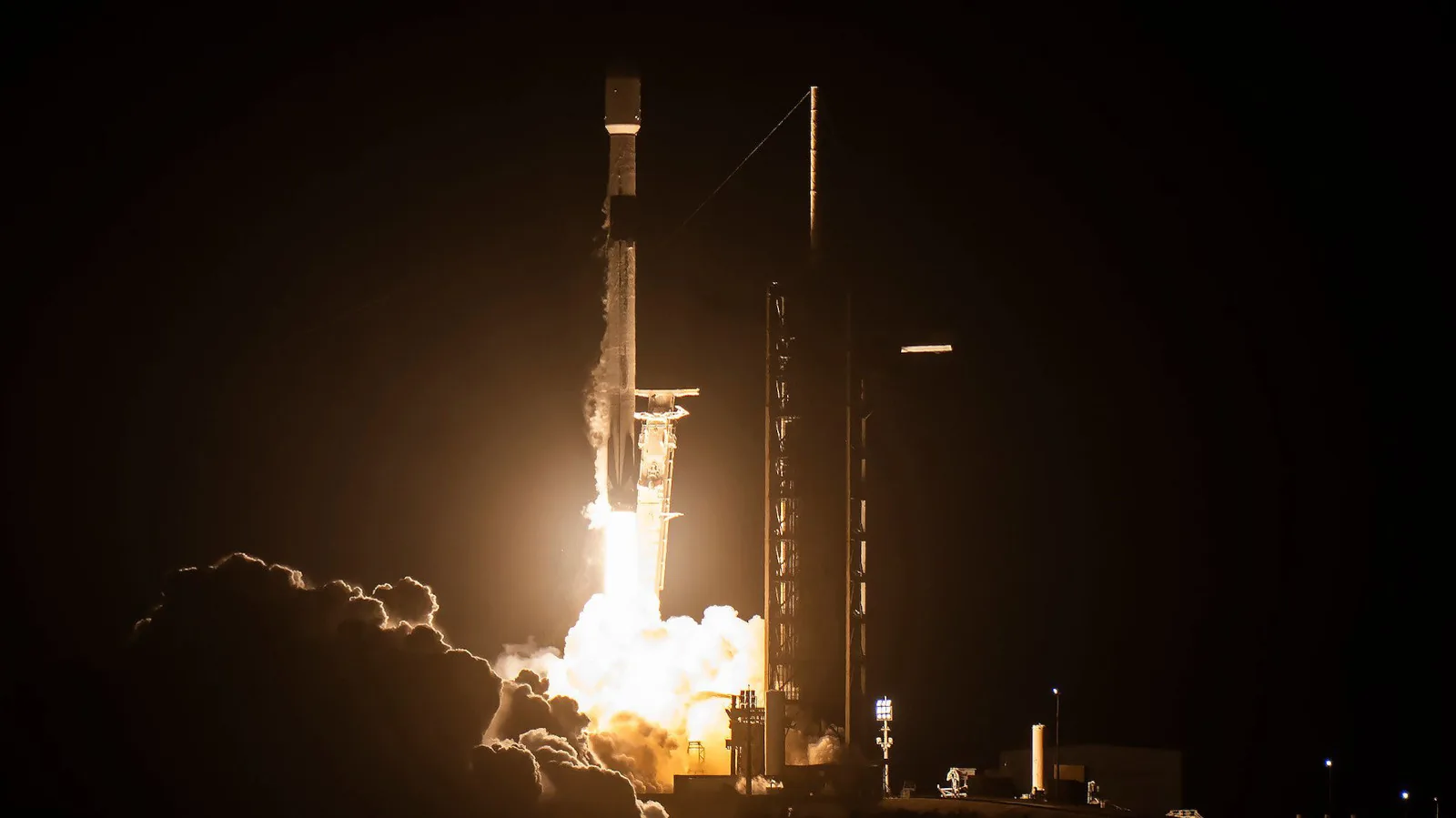
A SpaceX Falcon 9 rocket is expected to crash into the moon this August Astronomers will be able to observe it from our planet. On August 5 at around 2:35 AM ET, the upper stage of a Falcon 9 rocket is expected to crash into the moon near the Einstein Crater. As Gizmodo reports, it will likely be observable from certain locations on our planet using ground-based telescopes.
It was Bill Gray, the creator of Project Pluto desktop planetarium program, who first determined that the rocket will hit the moon next month after feeding data into his program to predict the rocket's orbit and future path The upper stage that will be crashing into the lunar surface came from SpaceX's Firefly Blue Ghost mission, which launched on January 15, 2025. Falcon 9 carried Firefly Aerospace's Blue Ghost lunar lander to space that flight, along with the Japanese company ispace's Hakuto-R lunar lander. Physorg explains that after the rocket had deployed the landers, it ran out of fuel and couldn't head back down to Earth.
It's been drifting in space ever since. The upper stage is roughly 39 feet long and 13 feet wide, with a weight of around 4,000 kilograms. It will slam into the moon at a speed of 5,400 mph.
According to a paper written by Grey and his colleagues, who used a physics simulator to analyze data, the upper stage won't really have that big of an impact. That's because even though it's larger than most natural lunar impactors, it's a hollow shell and is moving "much more slowly." Regardless, it's a chance for astronomers to observe an artificial impact in real time. They can use this chance to study how dust and plume move from impact events on the moon, as well as to look into the hazards of artificial space debris impacts.
Grey and the team said the impact will be most visible in locations in complete darkness at the time of the event, meaning it will be most observable in South America and low-to-mid latitude North America. The higher the moon is at the time of impact, the higher the chances of seeing the crash, which means astronomers in North America away from the West Coast are most likely to witness it.








Comentários (0)
Entre ou cadastre-se para comentar.